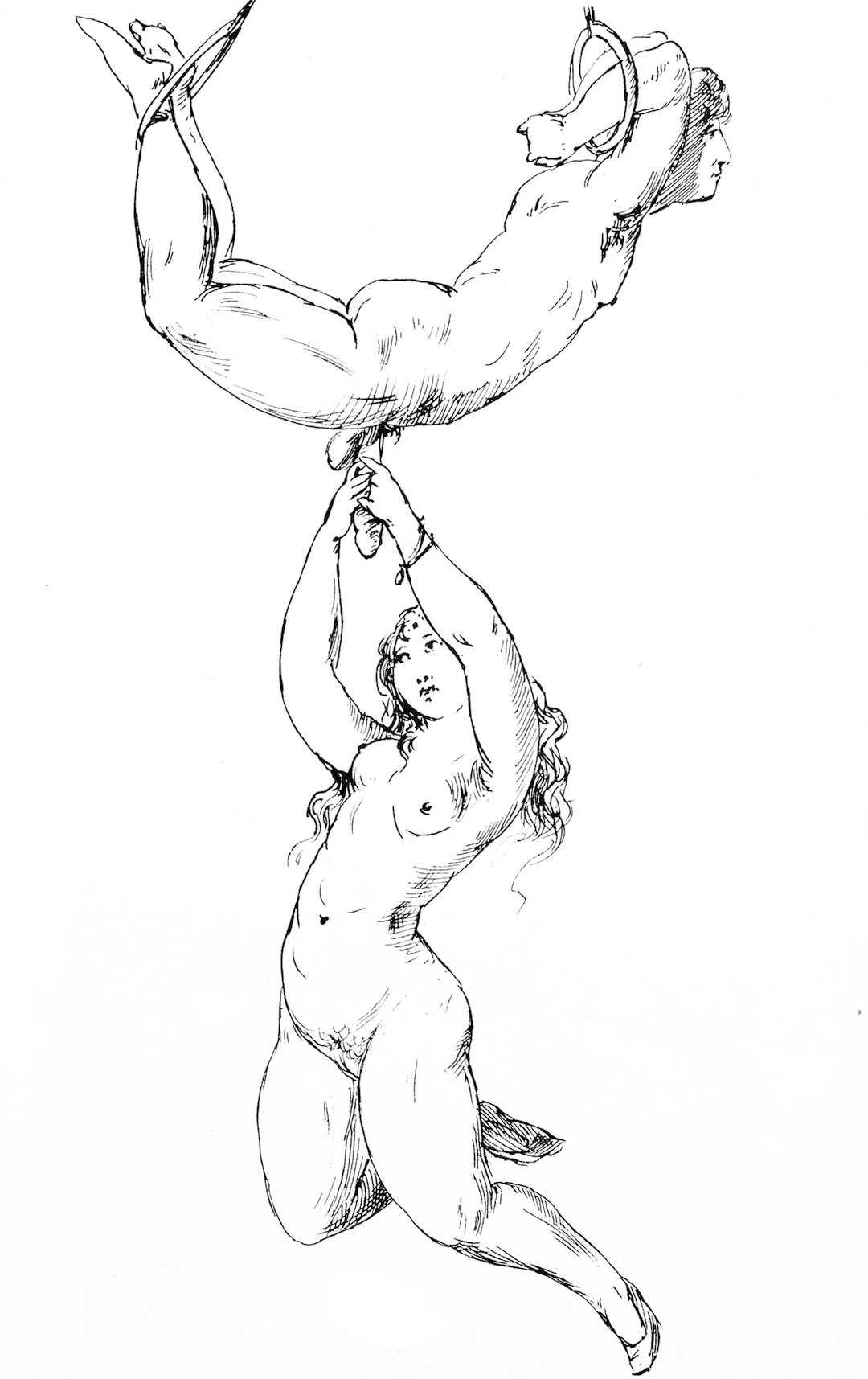
Erotic, sexually explicit art has been around for at least 37,000 years. There is no era in which it hasn’t flourished, varying in the degrees to which it was publicly licensed or privately traded. Instagram — and its parent company, Meta (formerly Facebook) — have recently ramped up social hygiene efforts to suppress erotic art and photography. ‘Curiositates Eroticæ’ (@boxthejesuit) is an educational effort to show the myriad and colorful ways that human sexuality has been depicted in art and literature over the æons, from prehistoric fertility statues, to Greek pottery and Roman mosaics, to Indian sutra, to all of those infamous “etchings” of the 18th and 19th centuries, we aim to demonstrate that pornographic art is common, unexceptional, and universal. Community standards, indeed. Whose?
boxing the jesuit idiom
a seafaring term for masturbating; a crime, it is said, much practised by the reverend fathers of that society